Published November 11, 2026 03:00AM
Colorado’s Moose Population is Booming. How Concerned Should Hikers Be for Their Safety?
These beautiful animals are an iconic Colorado sight—and can also be dangerous.

Moose investigating a car in Rocky Mountain National Park (Photo: Tom Luhmann)
Four knobby knees dangled in the air before disappearing into the gray sky. Meanwhile, the snow swallowed up the veterinarian and wildlife officials watching from below. The airborne limbs belonged to a blindfolded, sedated moose. She was cradled in a custom-made sling, attached to a cable suspended by a helicopter. It was 1978 and at the controls was a pilot with very precious cargo. He was on a mission: help transport 12 moose from Utah’s Uinta Mountains to North Park, Colorado.
Between 1978 and 2012, approximately 250 moose were transplanted across Colorado as part of the state’s moose reintroduction plan. Historically, the largest species of deer were thought to be 1,000-pound pilgrims, just passing through. Seeing one in Colorado was a rare privilege.
Today, Colorado boasts so many moose that human-moose encounters were a topic presented at the UCHealth Trauma, Critical Care, and EMS Symposium in Colorado Springs in August 2026. “Ten years ago we saw maybe one or two moose-related injuries each year,” says Chris Cribrari, MD, a UCHealth trauma surgeon. “Now we are seeing a handful of cases every year.”
What began as a dozen ungulates from Utah has turned into a population estimated to be 3,600 strong. “Our diversity of habitat, combined with a cool high-elevation climate, has allowed moose to occupy a large portion of the state and helps explain how Colorado went from a small introduced population to several thousand animals today,” says Eric VanNatta, a Colorado Parks and Wildlife (CPW) terrestrial biologist.
Rocky Mountain National Park’s first park-wide moose survey conducted in 2025 found that population density increased 49% in the last five years. Will Deacy, large mammal ecologist at Rocky Mountain, attributes this to the park’s protected habitat. Outside of park boundaries, CPW manages the state’s moose population with hunting. Inside the park, ammo isn’t an option. Natural predators aren’t prevalent enough to keep numbers in check, either.
Further complicating moose management is a resurgence of the longstanding debate: Are they even native to Colorado? For years, the wideheld belief was no. But a study published in June, 2026 found evidence that moose may have lived in Colorado long before the introduction, perhaps thousands of years. Prior to the study, no one, at least on record, had done a deep dive on the subject. “The inference that moose were not established in Colorado seems based on a superficial look at historic records that were published in the 1970s,” reads the new study, titled “Understanding Ancient Moose Populations in the Southern Rocky Mountains.”
The study’s leader, University of Colorado Boulder archaeologist William Taylor, and his team pored over archaeological, historic, Indigenous and paleontological records. The data they collected showed that “moose were a part of Colorado’s ancient fauna, and are not invasive.”
ADVERTISEMENT
That said, Colorado Parks & Wildlife and the National Park Service haven’t updated their published stances that research has yet to prove moose lived in Colorado year round and reproduced enough to maintain their numbers.But in some ways, it’s a moot point. The native vs. nonnative debate isn’t determining the approach the National Park Service is taking in its Wetland Restoration and Moose Management Plan.
“Park managers are responsible for protecting and sustaining healthy ecosystems and wildlife populations, regardless of a species’ historical presence,” says Deacy.
Still, unlike the park’s other non-native species, including dandelions and European starlings, moose can be disruptive. Along with elk, they’re a driving force behind the decimation of the park’s willows, triggering a chain reaction in the wetland ecosystem.
They’re also dangerous.
ADVERTISEMENT
How Dangerous Are Moose, Really?
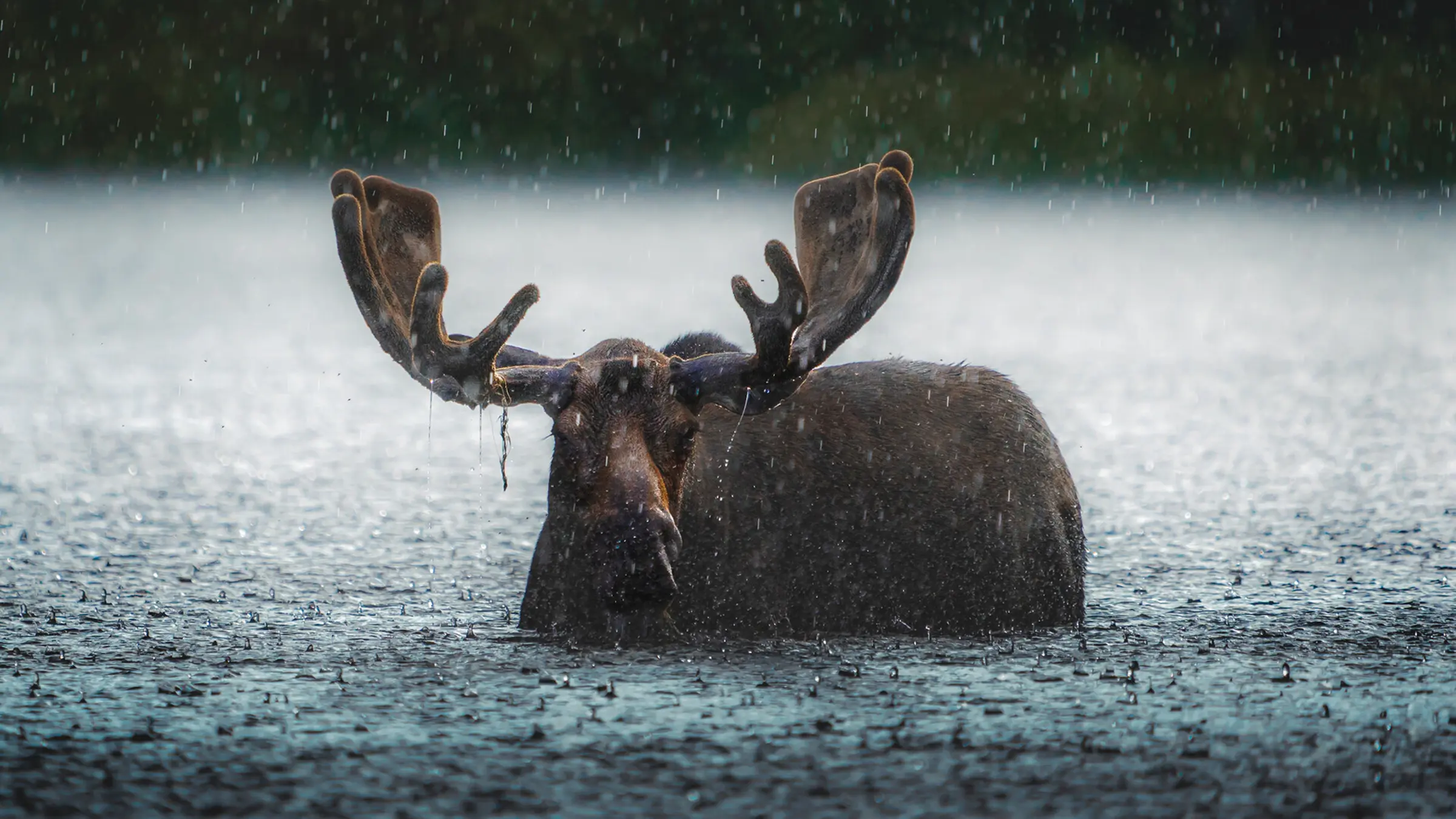
The recently released Rocky Mountain PBS documentary, Managing Moose: Colorado’s Most Dangerous Animal, reports that since 2019, 31 people in Colorado have been injured in moose-related incidents. That’s roughly the same number of bear and mountain lion attacks, combined. The figure is trending upward, too. Colorado recorded one incident in 2019. In 2025, there were eight, though fatalities are rare.
Colorado’s last moose-related death not involving a vehicle occurred in 2006 when Louis Heckert died from head injuries sustained in an encounter. The 92-year-old former mayor of Grand Lake was walking to church when he was attacked in an alley.
ADVERTISEMENT
How worried should people be outside of town, in proper moose territory? Very, according to Doug Haacke, who was attacked a decade ago while fishing near Red Lodge, Montana. Ten years later, the 71-year-old still suffers back pain from a broken spinal facet and bouts of PTSD. “It’s bad if I’m walking along a creek and hear branches snapping.”
Haacke was parting some dense willows when he found himself in a staring contest with an agitated mother, standing less than five feet away. “All I saw was this gray and black-streaked thing with two big black eyes bulging,” he recalls before she exploded at him, full charge.
She kicked him so hard she knocked the wind out of him and left a hoofprint on his back.
The impact sent his glasses and fishing rod flying. Haacke landed about seven feet away where he sought refuge under a tree root ball in the freezing creek.
“I worked for 10 seasons in Yellowstone,” says the former fishing guide and current vice president of Magic City Fly Fishers. “I knew after a moose knocks you down, they use their hind legs to finish you off.”
Surviving the stomping and kicking doesn’t mean you’re out of the woods, either.
ADVERTISEMENT
“The problem with wounds that result as a laceration from the hoofs is the contamination from a variety of pathogens,” says Dr. Cribrari. In his 33 years of experience, infections often arise. Facial and chest injuries are the most common.
Dogs Are Man’s Worst Friend in Moose Territory
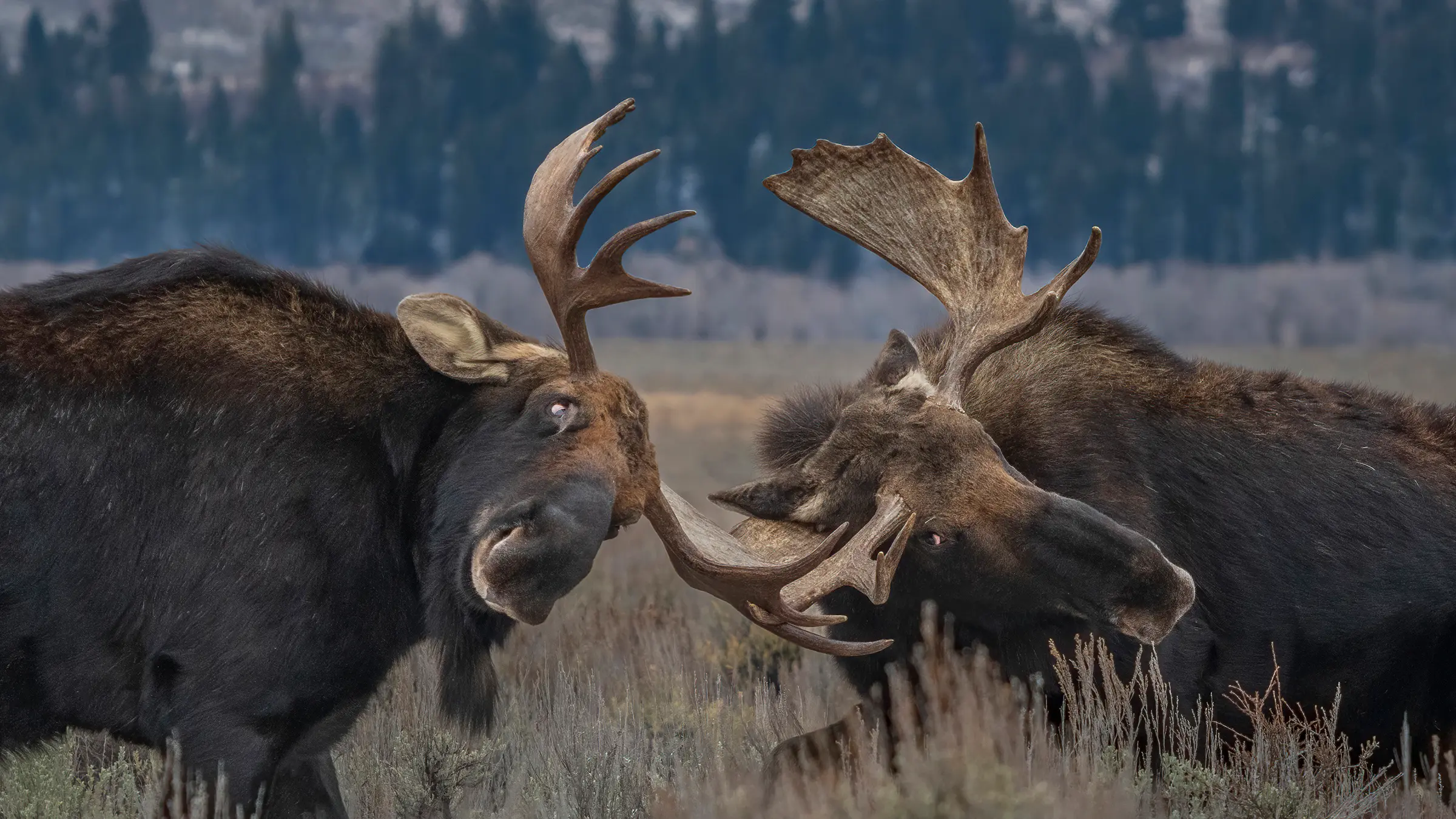
Rocky Mountain National Park has no documented moose attacks in its 111-year history. “The park has been fortunate to have very little conflict between moose and people,” says Kyle Patterson, the park’s management specialist/public affairs officer. “We think a major reason for this is that dogs are not allowed on park trails.”
Outside the park, it’s another story.
Since January 2024, 12 moose-human conflicts have been reported near Rocky Mountain National Park. Dogs were present in 10 of these cases. Two of the canines didn’t make it out alive. Dr. Cribrari calls man’s best friend “the force multiplier.”
“Throughout their range, wolves are an important natural predator of moose,” says VanNatta. Domestic dogs can provoke moose much like their forefathers. “If a dog approaches, barks or chases a cow moose with a calf, that action will likely be perceived as a direct threat, resulting in a charge or trampling.”
ADVERTISEMENT
Even leashes provide a false sense of security.
Wildlife biologist and Boulder County resident Chris Ray learned this firsthand when she was trampled by a moose in 2023 while walking her leashed dog on a trail near Ward, south of the national park. “Prey animals aren’t likely to understand or trust leashes,” says Ray, who suffered from a broken back, rib and sternum. “When a moose decides it needs to attack you, it’s likely experiencing a defensive impulse that can be very difficult to derail.”
In January 2024, a man walking in Fraser with two leashed dogs was charged by a cow (a female moose) with calves. Months later, two leashed dogs were stomped and a jogger was hospitalized in two separate attacks in 2024. This past May, a person walking two leashed dogs in Winter Park was hospitalized after an encounter with a cow and her yearling.
“Don’t ask how close you can get. Ask how far away you should stay back.”
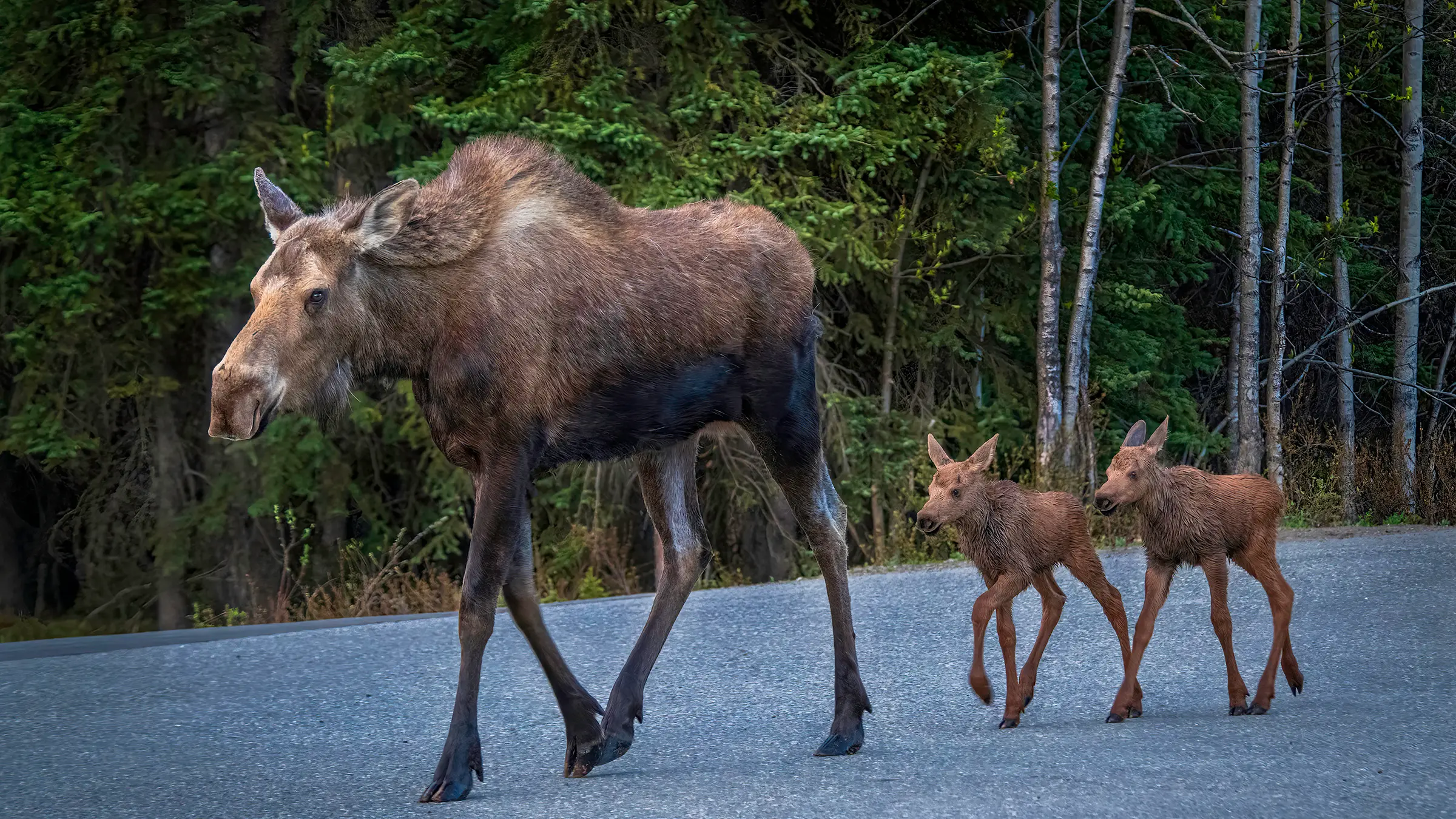
From restaurant recommendations to gear rentals and parking information, the questions fielded by the Aspen Chamber Resort Association (ACRA) cover almost everything. Still, an impressive 10% of all inquiries pertain to moose according to Eliza Voss, senior vice president of destination marketing at ACRA. In 2025, Brad Manard, founder of RMNPhotographer Tours in Estes Park, reported that he no longer gets asked about the elk first. “Now, it’s ‘Are we going to see a moose?” he told the Coloradoan.
Asked whether park visitors should consider moose as dangerous as mountain lions and bears, Patterson offers a surprising answer. “We do not think visitors should fear moose.” They should, however, give them space. “Don’t ask how close you can get. Ask how far away you should stay back.” For moose, the NPS says that distance is 120 feet.
ADVERTISEMENT
RELATED: Why You Shouldn’t Feed Wild Animals
Even if you’re more than three school buses away, if a moose is changing its behavior, you’re too close. Warning signs include pinned-back ears, raised hackles and a lowered head. If one charges, try to take cover behind a large object. “My best advice is to get yourself behind a tree,” says Ray. “I had bear spray with me that day I was attacked, and I knew how to use it, but you can’t stop a freight train with bear spray!”
In 2025, a man in Woodland Park survived an attack that killed his dog by rolling under a vehicle.
ADVERTISEMENT
Haacke, who still spends most of his time outdoors, minimizes risk by avoiding certain situations. He’s written off recreating in moose territory during calving—typically May and June. Autumn’s breeding season, when testosterone-fueled bulls are in rut, is also a no-go. Year round, he steers clear of areas with dense foliage where moose may be bedded down. “Otherwise, you’re in trouble before you even know you’re in trouble,” he says.
Perhaps hardest of all, Haacke has stopped exploring solo. “If I could tell anybody one thing, it would be this: Don’t go out alone,” he stresses. The more noise you make, the better. Plus, self-rescuing in a worst-case scenario isn’t ideal.
It’s been 48 years since that first moose woke up in a foreign land. The bold experiment worked. But as moose numbers climb, so do the challenges. The question of whether moose belong in Colorado is on the back burner. Figuring out how to coexist with an animal that can turn a leisurely hike into a harrowing experience is a more pressing issue.
ADVERTISEMENT
“The Adventures of Rocky and Bullwinkle” led generations of people to think of moose as lovable, dim-witted sidekicks, often the butt of the joke. Survivors like Haacke know better. Moose aren’t a laughing matter. They’re a freight train on four legs that you don’t always see coming.